If you are a UK business owner looking at your renewal quote, the most important question you need to answer is: Am I paying too much?
In 2025, the energy market remains volatile. Following the long-term impact of the Ukraine conflict and Europe’s shift away from Russian gas reliance, wholesale prices have fluctuated. However, as of October 2025, the market has stabilized enough to provide clear benchmarks.
At BBC Utilities, we believe in total transparency. Below is the definitive data on the current average Business electricity prices per kWh . Use this guide to check if your supplier is overcharging you.
1. Current Average Business Electricity Rates (October 2025)
The price you pay depends heavily on your business energy consumption. Suppliers offer lower unit rates to companies that use more power, while "Micro" businesses often pay a premium on unit rates but have lower standing charges.
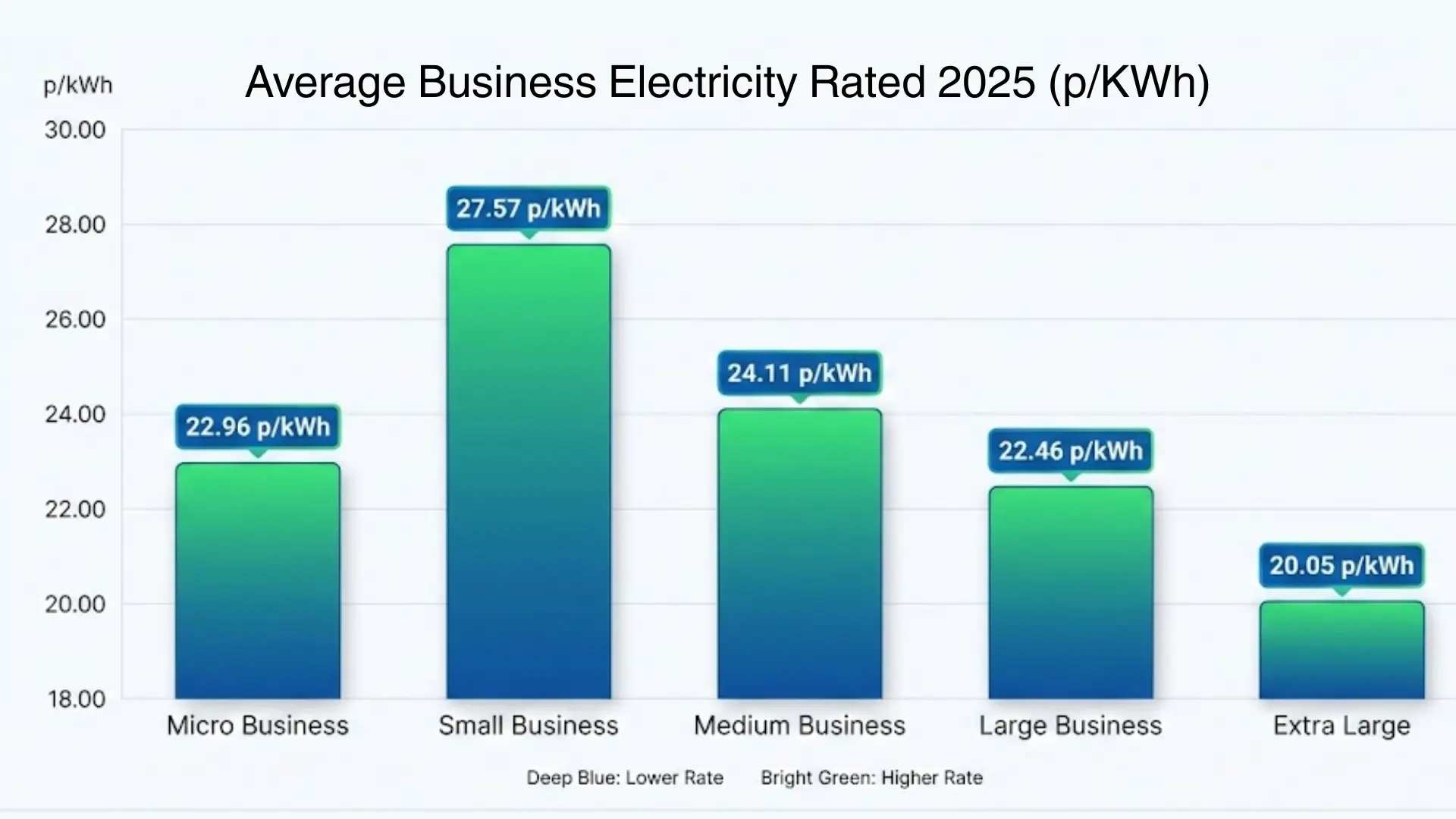
Here is the market snapshot for October 2025:
| Business Size | Annual Usage (kWh) | Average Unit Rate (p/kWh) | Estimated Annual Cost |
|---|---|---|---|
| Micro Business | 0 - 5,000 | 22.96 p/kWh | £887 - £1,200 |
| Small Business | 5,000 - 15,000 | 27.57 p/kWh | £2,884+ |
| Medium Business | 25,000+ | 24.11 p/kWh | £5,563+ |
| Large Business | 50,000+ | 22.46 p/kWh | £10,606+ |
| Extra Large | 100,000+ | 20.05 p/kWh | £19,356+ |
(Data Source: UK Market Snapshot 2025)
Key Takeaway: The national average across all sectors is currently 22.96 p/kWh. If your renewal quote is significantly higher than 28p per kWh, you are likely overpaying.
2. Why Do Rates Vary? (SME vs. Large Business)
You might notice in the table above that SME business energy rates (Micro and Small) are often higher than Large business rates. Why?
Buying Power & Metering
Large businesses consume energy in bulk. They often utilize Half-Hourly Meters, which send readings to suppliers every 30 minutes. This precise data allows suppliers to offer "time-of-use" tariffs, which are cheaper during off-peak hours.
SMEs, on the other hand, are often on standard profiles. For small businesses, the focus shouldn't just be on the unit rate, but on the Standing Charge-the daily fee you pay just to be connected to the grid.
Regional Differences
Did you know your postcode affects your price? Businesses in London often pay different rates than those in Scotland or Wales. This is due to the varying costs of transporting energy through the National Grid infrastructure to your specific location.
3. The Hidden Costs: Climate Change Levy (CCL)
When calculating your business energy consumption costs, you must account for government taxes.
The Climate Change Levy (CCL) is a tax added to your bill to encourage energy efficiency. As of April 2024, the CCL rate for electricity is 0.775 p/kWh
How to avoid this tax: If you switch to a Green Energy Tariff (sourced from 100% renewable wind or solar), you may be eligible for exemptions, helping you lower your carbon footprint and your tax bill simultaneously.
4. Warning: The "Rollover" Trap
The biggest mistake business owners make is inaction.
If you do not formally terminate your contract during your "renewal window" (usually 1-6 months before it ends), your supplier can automatically place you on a Rollover Contract.
- The Risk: Rollover rates are often 100% more expensive than negotiated deals.
- The Fix: You must compare prices and lock in a new deal before your current one expires.
Similarly, if you move into new premises without arranging a contract, you will be charged " Deemed Rates ", which are the highest tariffs on the market.
5. How to Secure the Best 2026 Rates Today
The energy market changes daily. While the averages above are a guide, the only way to get an accurate price for your business is to compare live quotes.
Why BBC Utilities?
- Speed: Compare quotes in under 60 seconds.
- Zero Hassle: We handle the switch. Your pipes and cables stay the same-only your billing provider changes
- Expert Support: We help you find your MPAN/MPRN numbers and manage the Letter of Authority (LOA).
Don't accept the first renewal offer you receive.
Frequently Asked Questions
Request A Call Back
Ever find yourself staring at your computer screen a good consulting slogan to come to mind? Oftentimes.